The genre is notorious for its use of low key lighting and shadow play, and black and white filming methods.
It proves, however, very hard to define the key conventions of Film Noir, as it is an incredibly diverse canon of film, with emphasis on many themes. French critics Raymond Borde and Etienne Chaumeton made this observation as early as 1955, but outlined the key features as 'oneirism, strangeness, eroticism, ambivalence and cruelty'.
The difficulty is in putting the genre into a box, or saying why it is 'Film Noir', though the private eye and femme fatale characters are classically affiliated with Film Noir, most films of the genre feature neither. Though Film Noir is thought of as an urban genre, many quintessential movies are set in suburbia. So neither setting or characterisation can be the definitive features of Film Noir. Instead many critics see it as a 'style' or a mood, its distinction is in its treatment of socially risqué themes as a norm, and the industry's arty influences.
Film Noir has roots in German expressionist film, and was partially kick-started by the emigration of many such expressionists escaping Hitler's regime.
The particular focus on femme fatales, women of 'questionable virtue', is a distinguishing quality. The distinction between the 40's and 50's periods is often to be found in how far the directors are prepared to push the illicit content, the 50's films seem to be far more liberal.
Many film noirs were produced as B movies, but have gone on to enjoy subsequent fame as classics of the style. As well as Film Noir's popularity in America, the international scene and in particular France made a huge contribution to the catalogue.
Visually, Noirs use chiaroscuro lighting, and extensively incorporate shadows into the setting. Often in scenes half of a character's face will be in darkness. Many directors make use of Dutch and low angle shots, to confer a sense of characters uneasiness, and to intimidate and disempower the audience. They also often use reflections in mirrors of characters, or through distorted glass. The direction of lighting can be used to connote certain features of the character, for example, being lit from below symbolises something ominous.
An important feature of many Film Noirs is the use of flashbacks and non-linear story lines, which ties in with oneirism and the allusion to dreams.
Film Noir has had a lasting influence in the Neo-Noir and Thriller genres, well into the modern day, such films as Taxi Driver, Heat, and Sin City provide evidence of a continuation of the Noir attitude.
Some scenes from classic Film Noirs

Out Of The Past, note the striking shadows
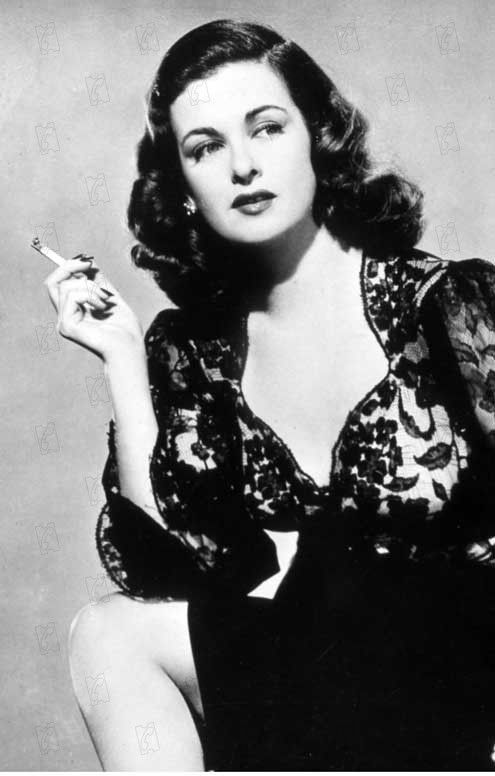
Joan Bennet as a femme fatale in Scarlet Street

Ascenseur Pour L'Echafaud is a classic of European Film Noir, and was scored by Miles Davis, I think meriting an appearance on my blog.


No comments:
Post a Comment